The future of laser optimisation is now

Angle-Encoded Variational Quantum Optimisation

Download paper

Kryptur Research presents a hybrid quantum-classical pipeline for multi-objective laser-ablation derusting — PINN surrogate, Bayesian and genetic baselines, and warm-started 5-qubit VQE.

Global minimum
0.5050
All optimisers converged
VQE evaluations
150
vs. 5,000 genetic · 100 Bayesian
Surrogate R²
1.0000
PINN on 10,000-point dataset
VQE fluence
5.46
J/cm² — beyond classical bounds

Research highlights

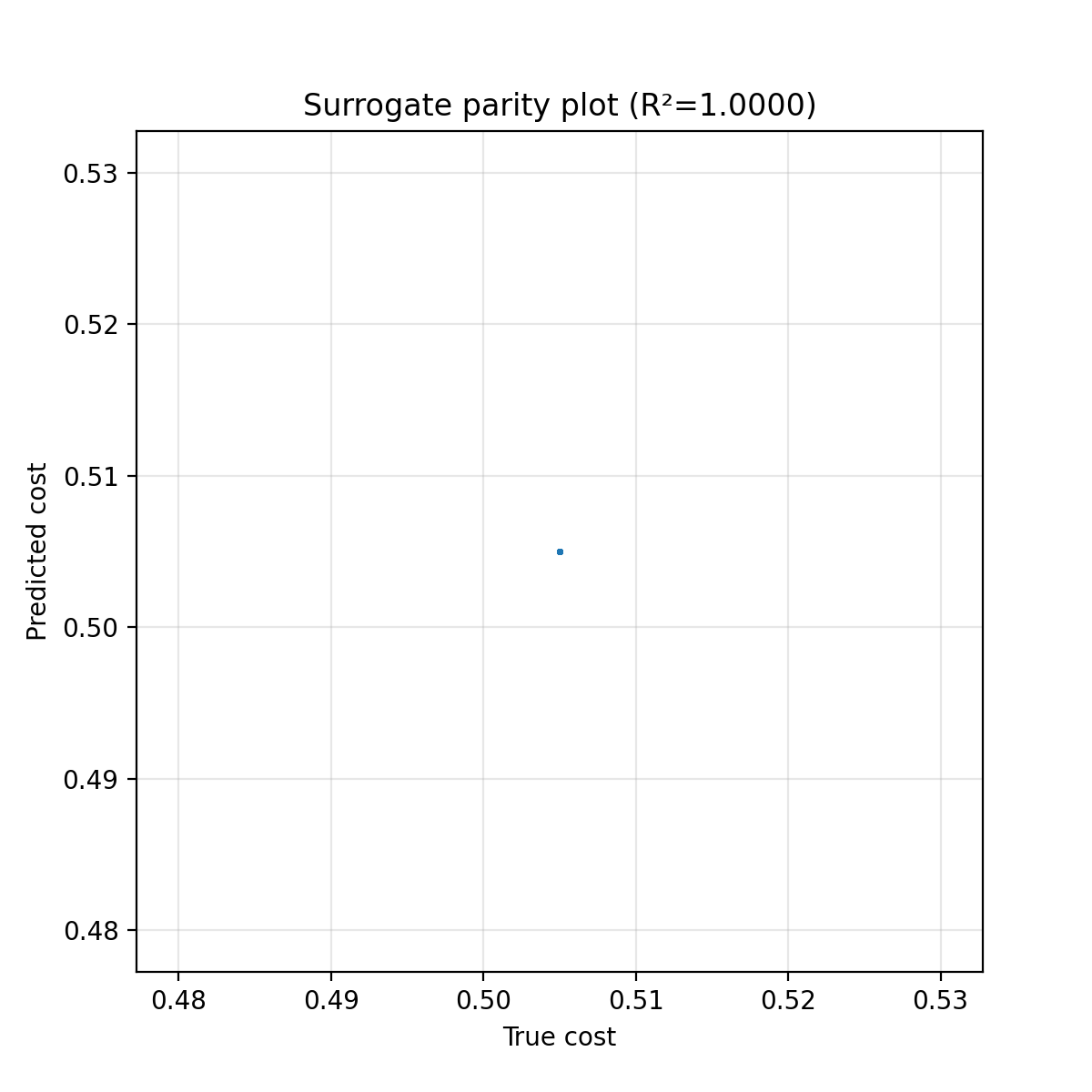
Surrogate parity — perfect PINN generalisation

Figure 1
MAE = 0.0000 · RMSE = 0.0000
Surrogate ModelMachine Learning

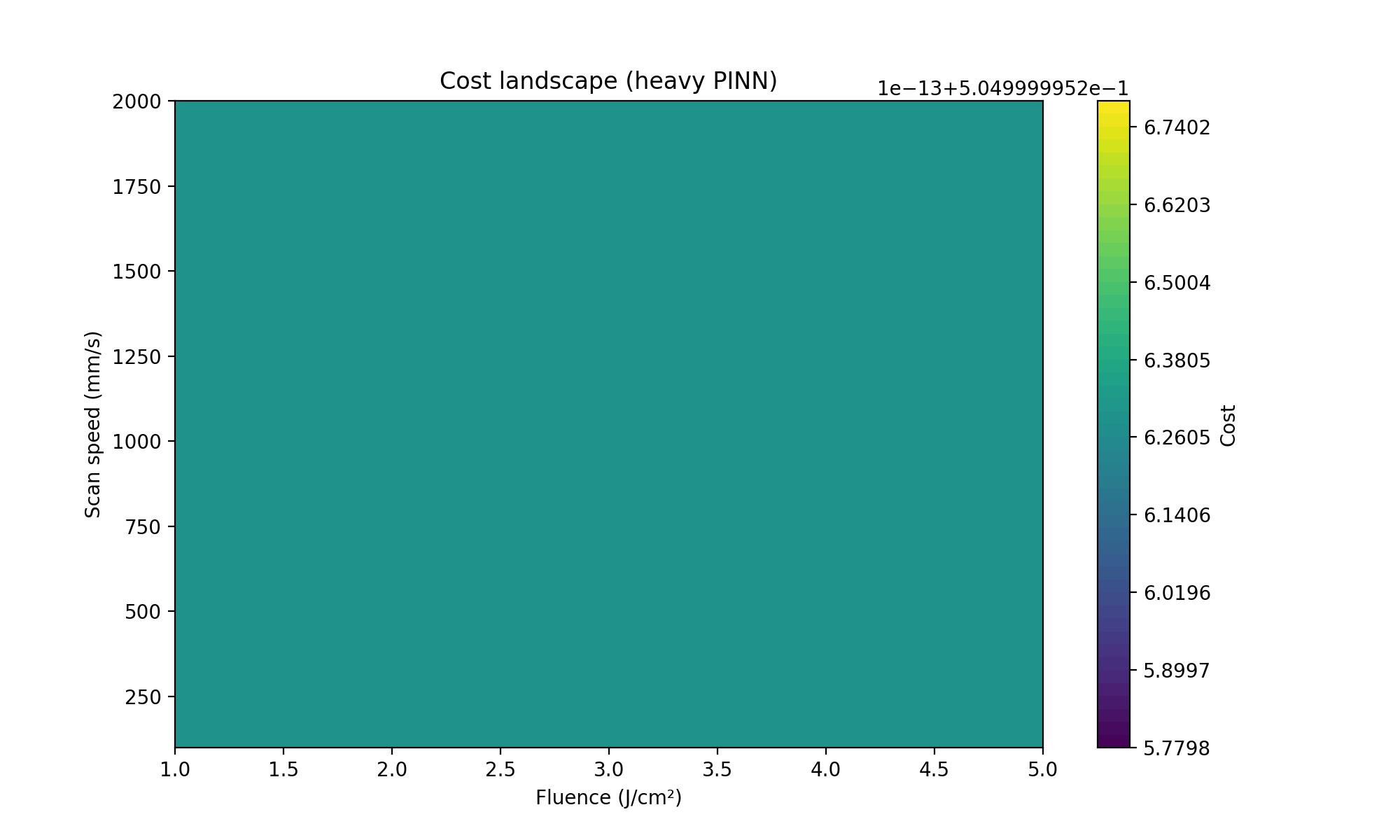
Cost landscape — fluence vs. scan speed

Figure 2
Smooth bowl-shaped global minimum
Multi-ObjectiveShip Steel

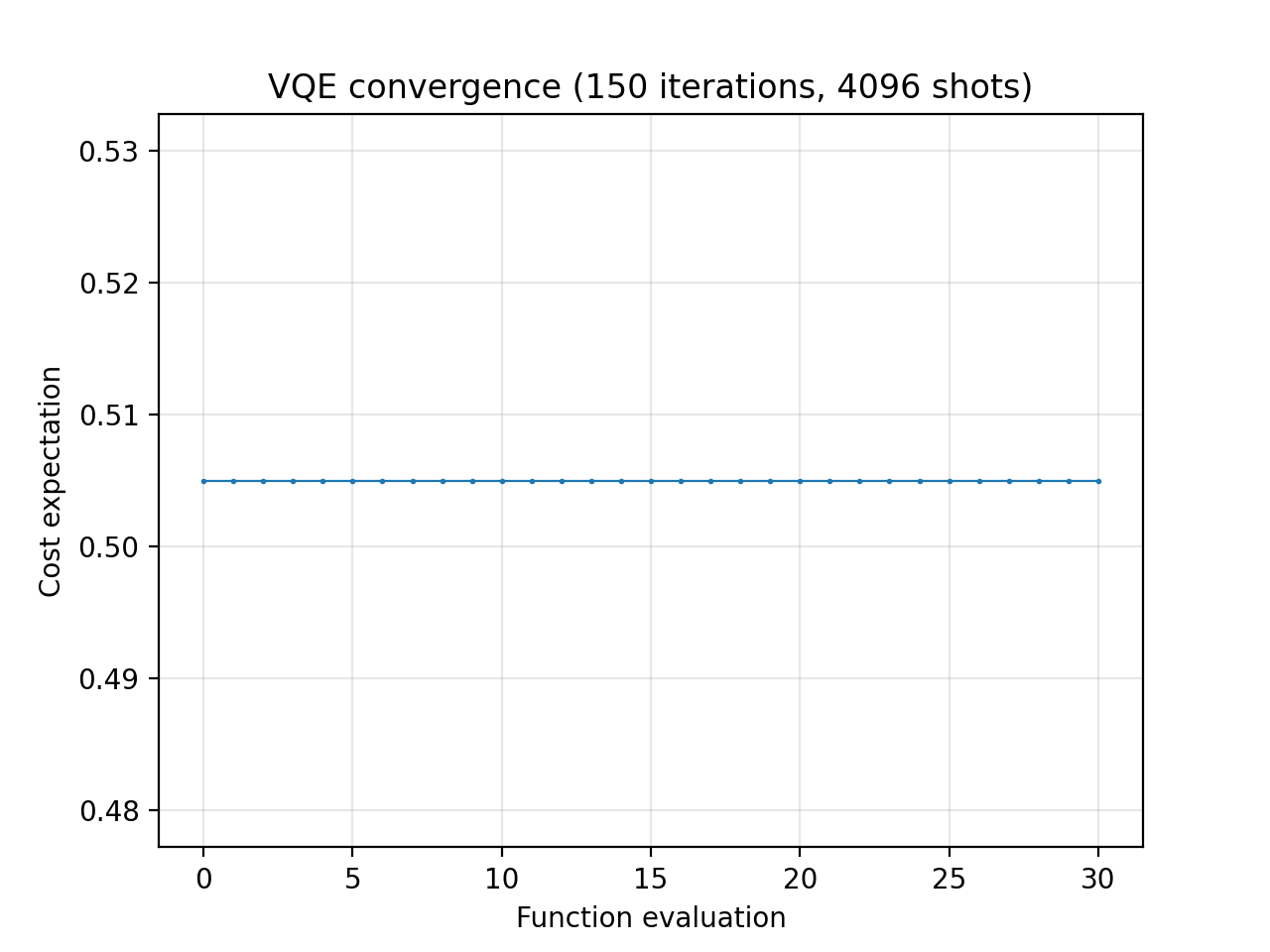
VQE convergence — 150 quantum evaluations

Figure 3
Warm-started from Bayesian optimum
QuantumHybrid Cloud
Read more research on our hub

Results & figures

Table 1. Optimisation performance comparison
MethodBest CostEvaluationsType
Bayesian optimisation (100)0.5050100Classical
Genetic algorithm (50 gen)0.50505,000Classical
VQE (warm-started)0.5050150Quantum-classical
Surrogate parity plot R²=1.0
Figure 1. Surrogate parity on the test set — every point lies on the diagonal (R² = 1.0000).
Cost contour fluence vs scan speed
Figure 2. Cost landscape (fluence vs. scan speed) from the heavy PINN surrogate.
VQE convergence curve 150 iterations
Figure 3. VQE convergence (150 iterations, 4096 shots). Dashed line: global minimum 0.5050.

Full paper, datasets & API

Research Paper: https://doi.org/10.5281/zenodo.20629615 · Open access · Zius Research Center · Kryptur OU

Research Paper

Stay up to date

with the latest from

Kryptur Research on

LinkedIn

Tools + Code