The future of quantum climate encoding is now

Ocean Temperature · OCNQENC

Download paper

Kryptur Research presents the first end-to-end amplitude encoding of a full month of global NOAA sea surface temperature into a 14-qubit state, with real-hardware execution on IBM ibm_fez (156 qubits).

Tucker compression
16,070×
31-day SST tensor → 2,000 core elements
Simulator fidelity
1.0
14-qubit exact amplitude encoding
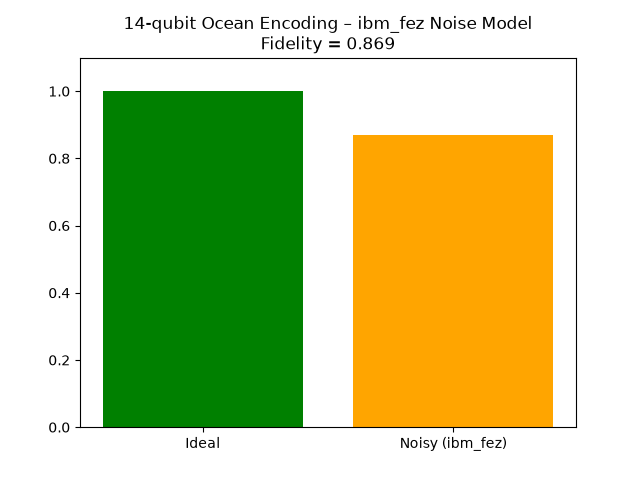
Noise-model fidelity
0.869
ibm_fez calibration-derived model
Real-hardware fidelity
0.25
First geophysical field on a QPU

Research highlights

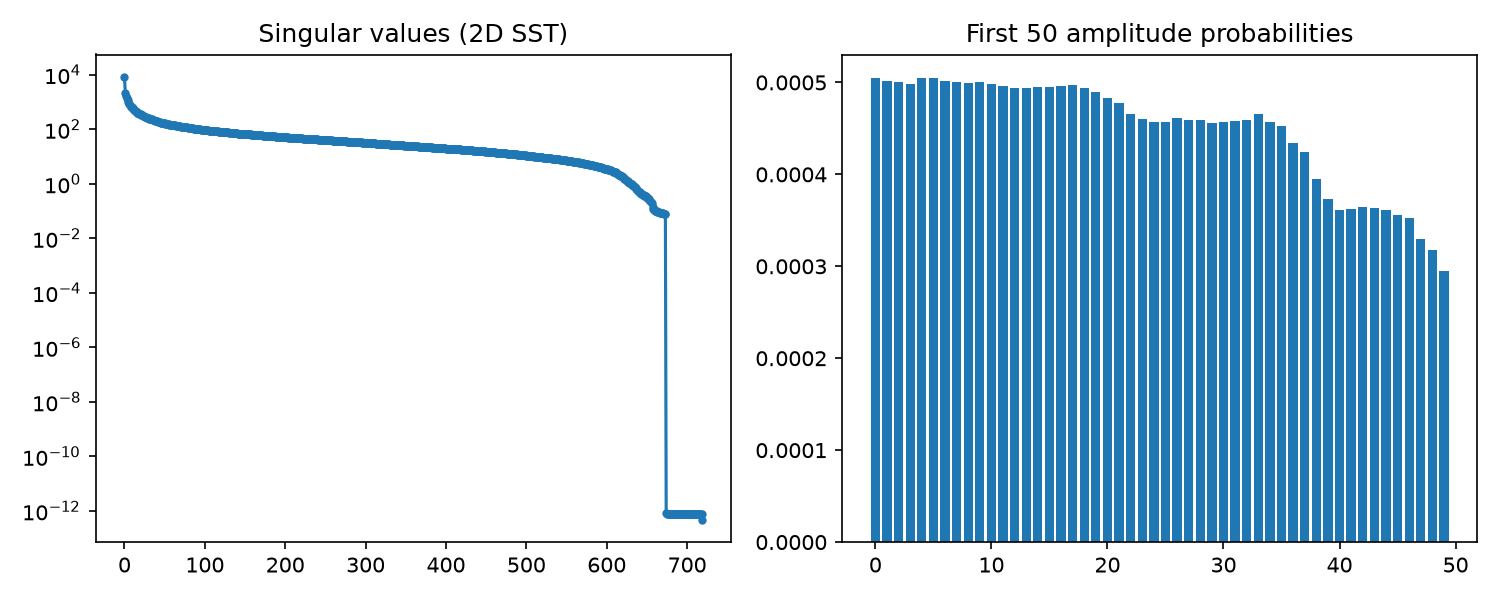
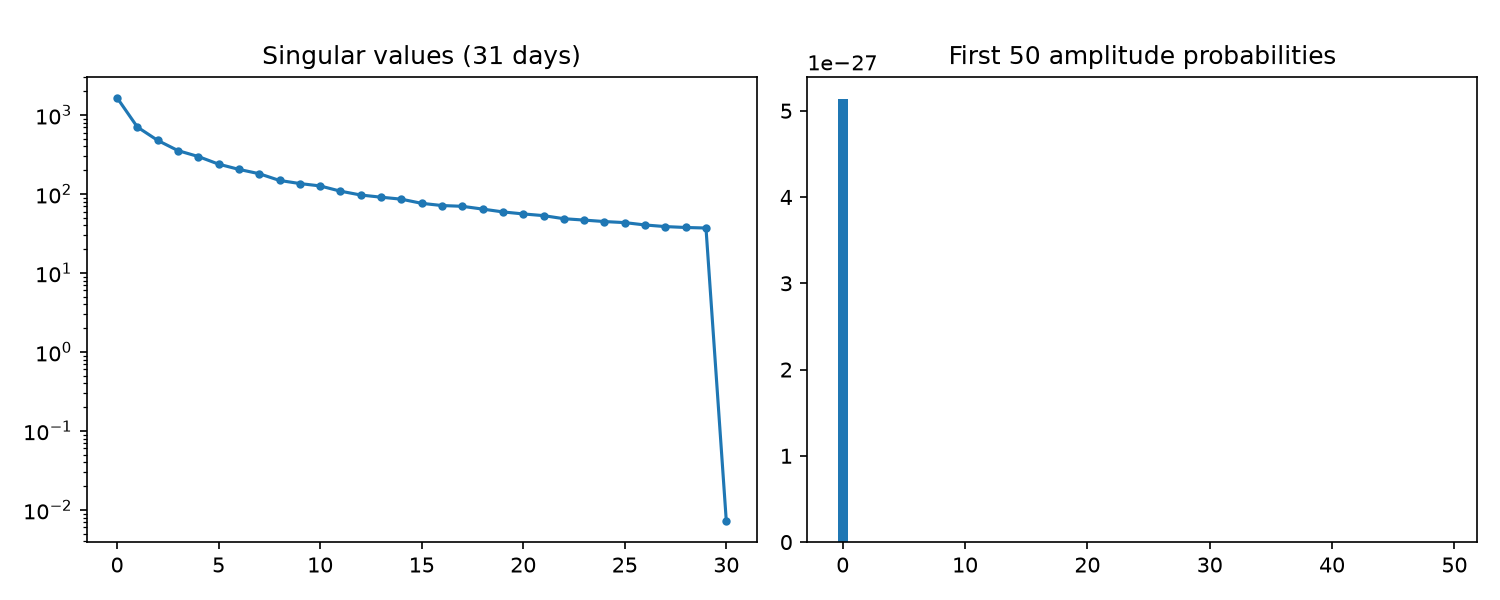
Singular-value spectrum and amplitude probabilities for January 2023 SST

Figure 1
Top 20 SVD modes capture >95% variance
NOAA OISSTEncoding

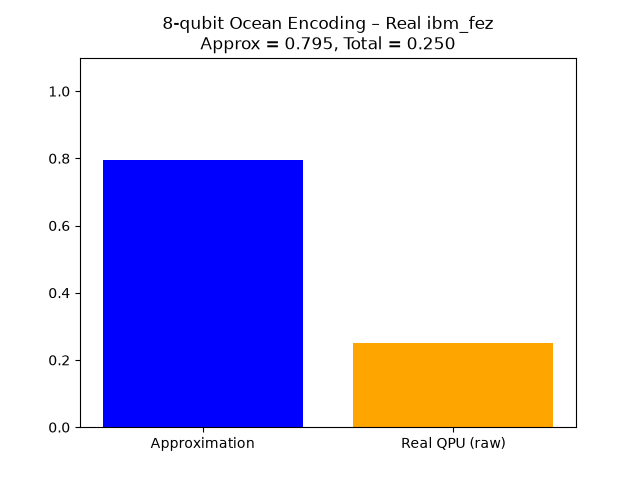
Variational approximation vs. real QPU fidelity on ibm_fez

Figure 4
F_approx = 0.795 · F_hardware = 0.25
ibm_fezNISQ
Explore OCNQENC pipeline on GitHubRead more research on our hub

Results & figures

Table 1. Fidelity hierarchy across encoding stages
StageQubitsFidelity
Ideal simulator (amplitude encoding)141.0
ibm_fez noise model140.869
Variational MPS approximation80.795
Real hardware (ibm_fez)80.25
Table 2. Pipeline compression and entanglement metrics
MetricValueNotes
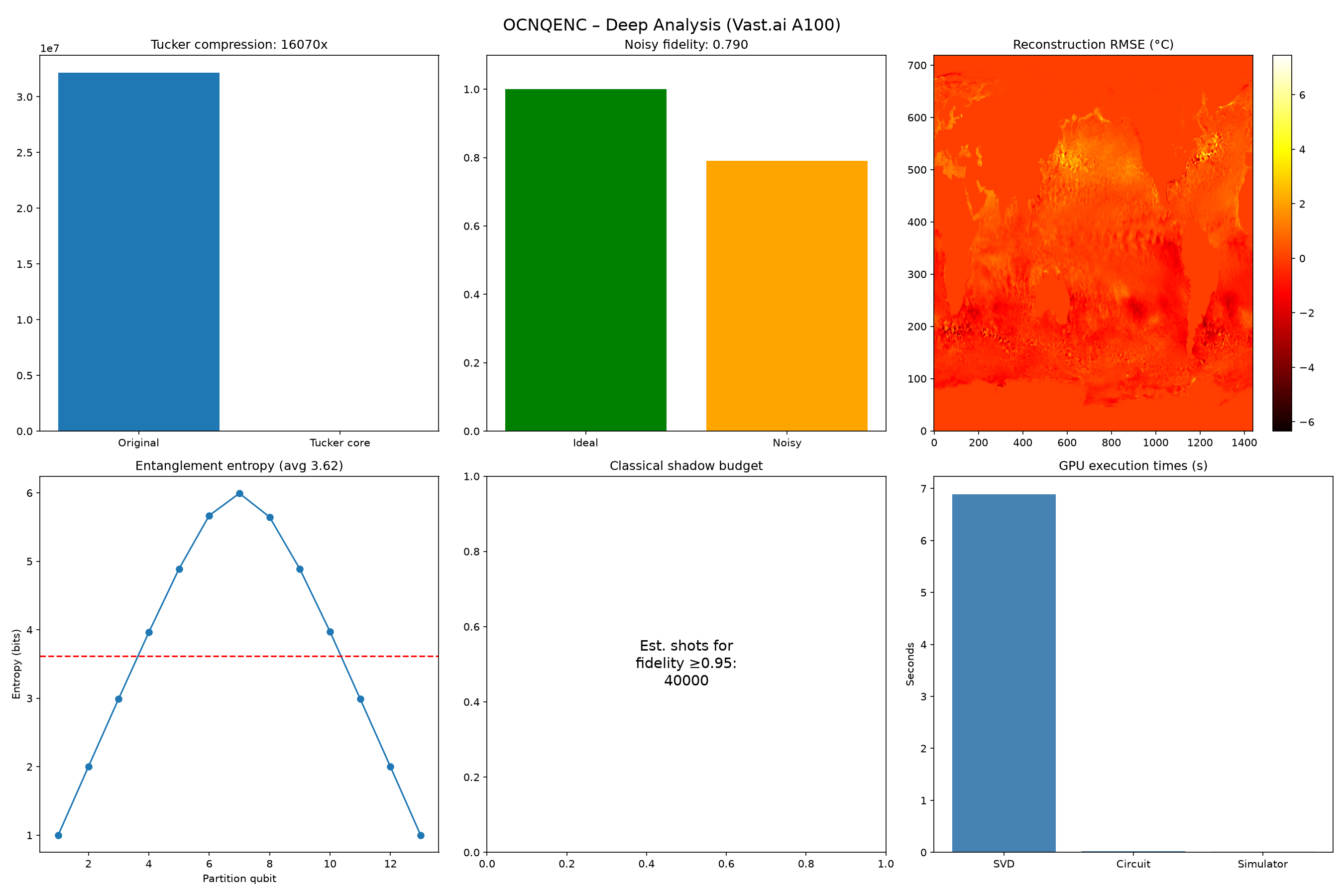
Tucker compression ratio16,070×31 × 720 × 1440 grid → 2,000 core elements
SVD variance (20 modes)>95%Dominant ocean modes retained
Avg. entanglement entropy3.62 bitsModerate; MPS-compatible structure
Shadow budget (F ≥ 0.95)40,000 shotsFeasible on free-tier QPU access
Singular-value decay and first 50 amplitude probabilities for January 2023 global SST
Figure 1. Singular-value spectrum and amplitude probabilities for the multiday NOAA OISST anomaly field. Top modes concentrate variance before 14-qubit amplitude encoding.
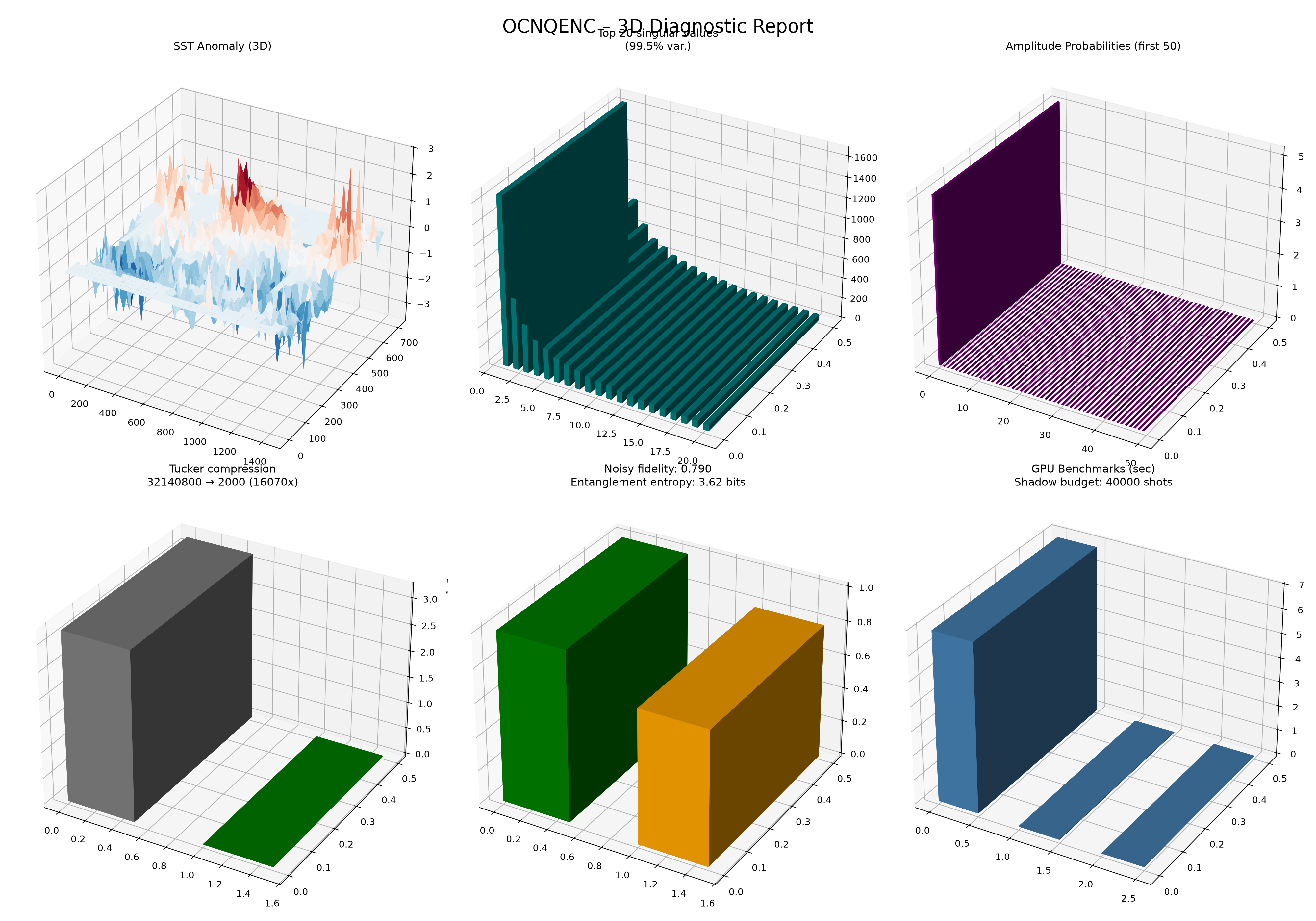
3D diagnostic report of SST anomaly, Tucker compression, and GPU benchmarks
Figure 2. 3D diagnostic: SST anomaly field, singular-value spectrum, Tucker core compression (16,070×), fidelity and entanglement entropy, and GPU preprocessing benchmarks.
Deep analysis panels for Tucker compression, reconstruction RMSE, and shadow budget
Figure 3. Tucker compression panels, reconstruction RMSE map, entanglement entropy across bipartitions, classical shadow shot budget, and GPU timing breakdown.
14-qubit ideal vs ibm_fez noise-model fidelity comparison
Figure 4. 14-qubit encoding fidelity: ideal simulator (F = 1.0) vs. ibm_fez calibration-derived noise model (F = 0.869).
8-qubit variational approximation vs real ibm_fez hardware fidelity
Figure 5. 8-qubit variational approximation (F = 0.795) vs. measured real-hardware fidelity (F = 0.25) on ibm_fez — first experimental proof-of-concept for a quantum-encoded geophysical field.
Single-day SST encoding preview from pipeline step one
Figure 6. Single-day SST encoding preview: SVD modes and amplitude vector preparation before multiday Tucker compression.

Full paper, pipeline & data

Research Paper: https://doi.org/10.5281/zenodo.20736570 · Open access · OCNQENC Research Initiative · Kryptur OU

Research Paper

Stay up to date

with the latest from

Kryptur Research on

LinkedIn

Tools + Code